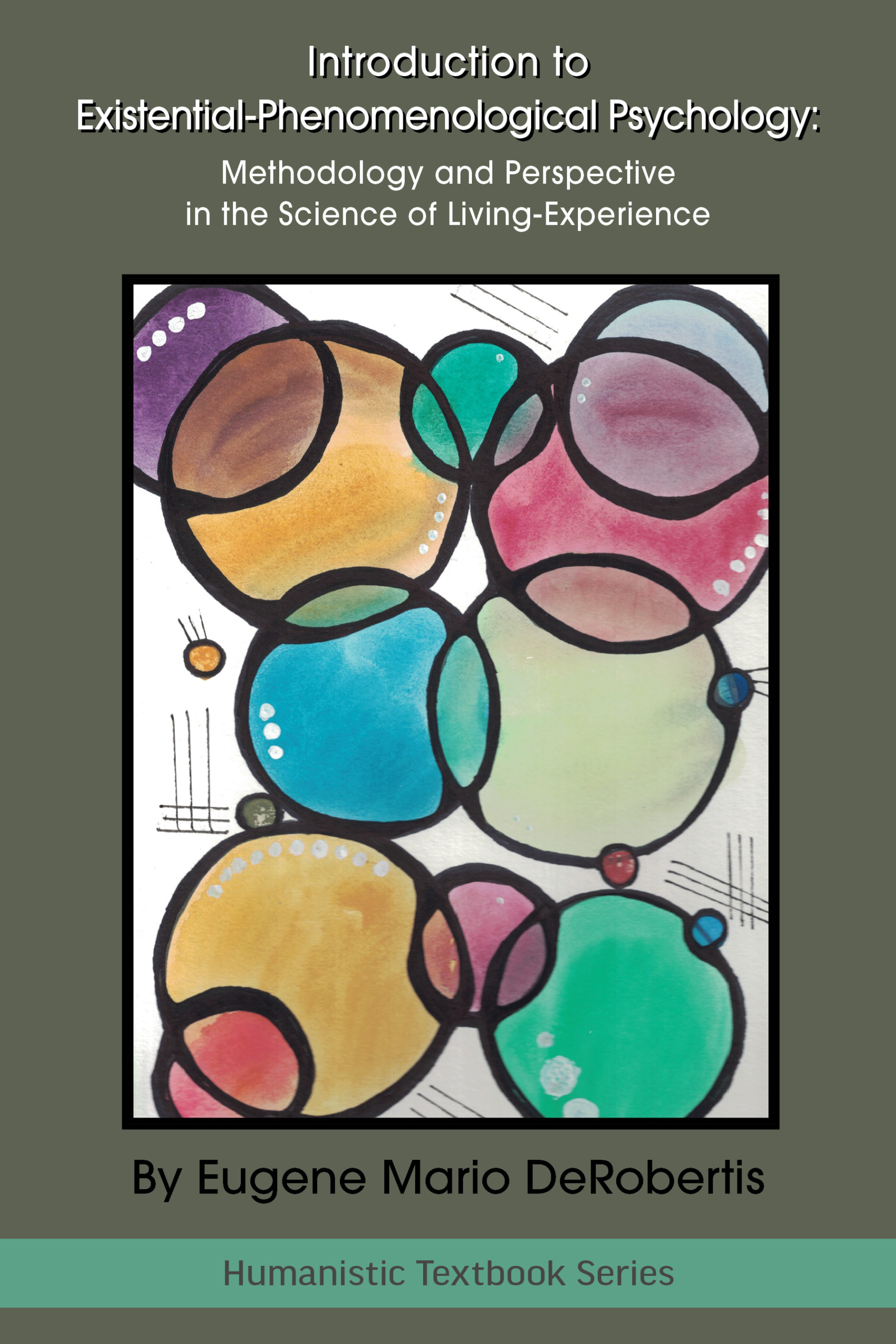
Product Description
Eugene DeRobertis’s introductory book should be mandatory reading for any student of existential phenomenological psychology or qualitative psychological research. In his pedagogically illuminating style, DeRobertis takes the reader through the landscape of phenomenological and existential thought and how it applies to a psychology envisioned as a human science. Content ranges from research methodology to concrete studies of anxiety, to the unconscious, and includes both theoretical controversies and future challenges.
Magnus Englander, PhD, Associate Professor of Health and Society Studies at Malmö University
DeRobertis’s latest book is a tour de force that brings together in one place his decades-long dedication and personal edification within the existential phenomenological tradition in psychology. The book as a whole is nothing short of a masterclass in how to take an audience by the hand through the history, philosophical underpinnings, institutional developments, and individual contributions from a myriad of sources that together constitute the state-of-the-art in the field of existential phenomenological psychology today. Drawing generously from both European and American primary sources, DeRobertis offers clear exposition with painstaking attention to detail, providing readers with authoritative and trustworthy characterizations of a tradition that holds the promise not only of filling gaps in current psychological theory but also of offering a viable pathway forward. The prose is readable and engaging throughout, and the included demonstration of an actual existential phenomenological research investigation provides compelling testimony to the value of this approach in grasping at the meanings that lie just below the surface within human experience. This book is a must-read not only for graduate students and advanced undergraduates but for professors and qualitative research mentors looking for a reliable guide in the classroom.
Scott Churchill, PhD, Author, Essentials of Existential Phenomenological Research
Release Date: June 3, 2026
Pages:
Hardcover ISBN: 978-1-955737-69-2
Paperback ISBN: 978-1-955737-68-5
ebook ISBN: 978-1-955737-70-8
Acknowledgements
Foreword by Fred Wertz
Preface
CHAPTER 1
Philosophical Background: The “Third Way” of Existential-
Phenomenological Psychology
Part I: Methodology
CHAPTER 2
Phenomenological Psychological Research: A Conceptual-
Methodological Outline and Introduction
CHAPTER 3
Phenomenological Psychological Research in Perspective:
Controversies and Horizons
CHAPTER 4
Unclarified Phenomenology in Conventional Psychology:
Lessons from the Study of Embarrassment
Part II: Perspective
CHAPTER 5
Existential-Phenomenology and the Landscapes of
Living-Experience: Descriptive Exemplars in 5 Domains
of Human Being-and-Becoming
CHAPTER 6
Standing on the Shoulders of Phenomenology: Living-
Experience as a Stepping-Off Point for Existential
Psychology
CHAPTER 7
The Phenomenology of Anxiety: Anxiety as Existential,
Psychological, and Pathological
CHAPTER 8
Existential-Phenomenological Psychology and the
Unconscious
CHAPTER 9
Assessing the Road Ahead: Existential-Phenomenological
Psychology’s Footholds, Challenges, and Opportunities
References
Index
About the Author
Introduction to Existential-Phenomenological Psychology is available on
Apple iBooks
Amazon Kindle
Barnes & Noble Nook
Google Play
Eugene Mario DeRobertis, PhD, is Professor of Psychology at Brookdale College in New Jersey. He also teaches part-time for Rutgers and Kean Universities. Dr. DeRobertis completed his education at Duquesne University, where he received his initial training in the phenomenological method as adapted for psychological research. Prior to committing himself to teaching full-time in 1996, he worked as a developmentally oriented psychotherapist, an academic counselor, and an addictions counselor. He has published numerous peer-reviewed works in phenomenological psychology, existential-humanistic psychology, psychological theory, and developmental psychology with a particular emphasis on childhood. His books include Humanizing Child Developmental Theory: A Holistic Approach (2008), The Whole Child: Selected Papers on Existential-Humanistic Child Psychology (2012), The Phenomenology of Learning and Becoming: Enthusiasm, Creativity, and Self-Development (2017), and Profiles of Personality: Integration, Paradox, and the Process of Becoming (2021). He is a member of Divisions 32 (Society for Humanistic Psychology) and 5 (Society for Qualitative Inquiry) of the American Psychological Association and currently serves as Review Editor for the Journal of Phenomenological Psychology.



Reviews
There are no reviews yet.